
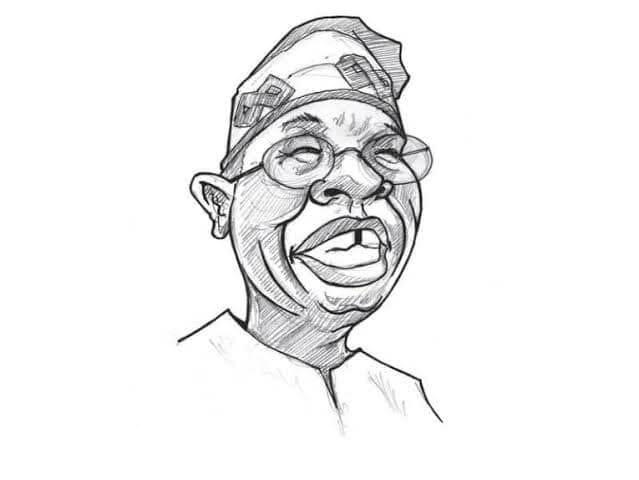
THE GREAT SHEIKH OF OUR TIMES: DAHIRU USMAN BAUCHI [1927-2025].
“O Allah, send blessings on our Master Muhammad, who opened what was closed, who sealed what had gone before, the helper of Truth, the guide to Your straight path, and on his family. May these blessings be equal to his immense position and grandeur.”
This, perhaps, is the most favorite salutation of Sheikh Dahiru Usman Bauchi, the legend, enigma, and towering figure of the Tijjaniya Sufi order that dominated Islamic discourse across the country and parts of West and Maghreb states for decades. The great Sheikh is resting in Barzakh now, wrapped and enveloped in the blessings and divine mercy of Allah. He was among the stars that lightened up the path and shone his light upon millions through his teachings and mastery of the Qur’an and the Sunnah of the Prophet of Islam and other great scholars of Islam. He is among those stars that appear once in centuries.
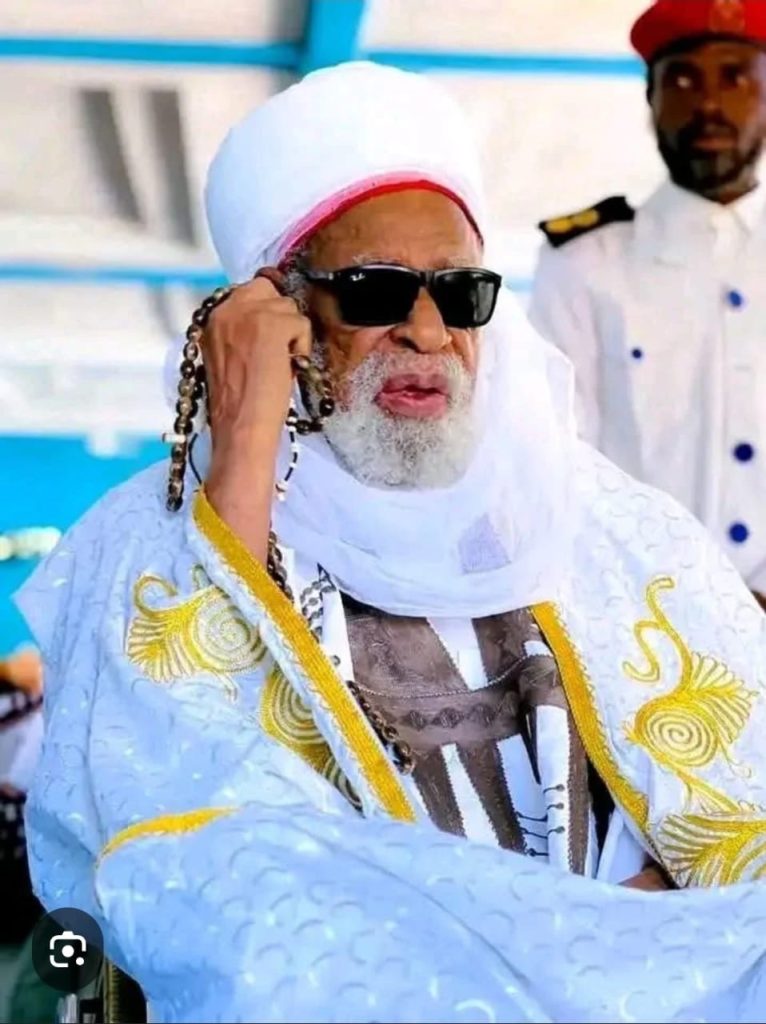
He chose that path that was untraveled by many: the distressed, difficult, turbulent, travelled only by seekers of truth, those who sacrificed the pleasures of the world to gain the pleasure of Allah and His Messenger. They live for others, and they aim to rise above material conditions. He illuminated the world with his knowledge and lit the sky with his words derived from the verses of the Quran which the Almighty had made easy for him and his progeny. The Quran was his treasure; he, his children, and grandchildren were blessed to have the whole of its blessed phrases engraved in their memory and could recall every part of it without any difficulty. This certainly is of the mercy of the Lord, that He giveth to whom He wills. Many decades of devotion, teaching, service, and scholarship earned the Sheikh his station amongst the great scholars of our time, and particularly the Sufi Tijjaniya sect that is widely known across the world.
The Tijjaniya sect is a Sufi order that was founded by Sheikh Ahmad Tijjani [1737–1815], who was born in Algeria and died in Morocco. The teachings of the sect spread rapidly into West Africa from Mauritania around 1789 to become the largest Sufi order in West Africa, with massive followership in Senegal, Nigeria, and Mali. The sect’s core teachings laid emphasis on the remembrance of Allah [Dhikr] and devotion associated with spirituality, knowledge, and piety.
Leading figures of the sect, apart from Sheikh Ahmad Tijjani, include Umar Tall Al Futi [1794–1864], who propagated its teachings in the Senegambia and Nigeria, and El-Hajj Malik from Senegal, who founded a popular Zawiyya of the sect in the country. These were later followed by Sheikh Ibrahim Niasse [1900–1975], who founded the Ibrahimiyya branch that became the largest branch; Sheikh Ahmad Tijjani Ali [1955], leader of the Ibrahimiyya branch in Senegal after Niasse; and Sheikh Dahiru Usman Bauchi, who is regarded as one of the oldest and most influential leaders of the sect and became popular within the order for his knowledge of the Quran and tafsir, with millions of followers; and Sheikh Muhammadu Mahi, who succeeded his brother to lead the Ibrahimiyya branch in Senegal, to mention a few. This is based on the established hierarchy of the sect as recorded in several texts.
This perhaps, explains the loss and vacuum created by the demise of Sheikh Dahiru Usman Bauchi. It is a loss that is difficult to comprehend, quantify or easily understand not because our minds lack the capacity to do so, but to imagine who can fill the gap created by his absence in this contemporary era when Islamic scholarship is in the decline and morality is at its lowest. It is significant to understand the station of the Sheikh side by side other great scholars in terms of their ranking, particularly within the Tijjaniya Sufi sect. It is indeed for these reasons that many were devastated when the death of the great Sheikh was made public.
It was not sadness, but a feeling of emptiness and loss of leadership and spiritual guidance that the Ummah and followers of the Sheikh will be left to grapple with. It remains the main concern, as correctly observed by Sheikh Ibrahim Dahiru Bauchi, his son and successor, when he was asked in an interview how saddened he was by the death of his father. One cannot but agree with him. He smiled and argued that it certainly cannot be described as sadness, considering the kind of life the Sheikh lived, and said we can only thank Allah, for it was a fulfilled life, one spent in the service of Allah and Islamic scholarship. When I called a disciple of the Sheikh to send my condolences, a son to the Late Sheikh Ali, he expressed his concerns to me, saying who can take over all the responsibilities of the Sheikh now, and I asked: how? He responded, saying, “For example, in Bauchi metropolis alone the Sheikh has over a thousand houses whose occupants paid no rent and relied on him for their livelihoods, school fees, and medical expenses.”
This is apart from madrasas and mosques built or maintained by the Sheikh. The Sheikh built and supported thousands of schools and millions of students in the study of the Quran, Fiqh, hadith, and other Islamic sciences across Nigeria. In contemporary Nigeria, there are few scholars that made such contributions to the society. People like Sheikh Abubakar Gumi have made exemplary contributions in their own noble ways. However, it remains doubtful if, after the likes of Shehu Usman Danfodio, Abdullahi of Gwandu, and Sultan Bello, the nation or the Muslim Ummah have seen a figure like Dahiru Bauchi. This is in no way a comparison with Shehu Danfodio, who waged the Islamic Jihad that swept across the whole of northern Nigeria and established the Islamic Caliphate.
These were different times, but I bet you if there would have been another jihad upon a jihad, it would have been waged by Dahiru Bauchi. He worked tirelessly to unite Muslims and non-Muslims alike, as testified by Solomon Darlung in a recent interview, narrating how he was invited by the Sheikh for Iftar during the month of Ramadan. Darlung was awed to hear the Sheikh say to him that Muslims are forever indebted to Christians, and related the story of the Prophet Muhammad and the Abyssinian Christian king that gave him refuge at the time he was persecuted by the pagan rulers of Mecca. The king refused to let Muhammad and his people be taken by the rulers of Mecca. The Sheikh’s contribution transcended the religious realm and extended to secular roles by promoting interfaith dialogue and integration among Nigerians.
The demise of the Sheikh was not only a loss to the country, Muslims, or the Tijjaniya sect, but a personal loss to our family that had long-standing relationship with the Sheikh through our grandfather, Ibrahim Gamawa. Their relationship developed over several decades, from being students under Sheikh Adamu Badamagare at Azare in the 1930’s. Through the 40’s, they would continue to share knowledge and visits to each other until 1996 when our grandfather died. The Sheikh would usually visit our home at midnight, and we would be asked not to lock the gates, that the Sheikh is expected; and when he comes, they would be in our grandfather’s room, and the Sheikh will most at times depart shortly before dawn. We will not go to bed at those times until he leaves, and then we lock the gates.
Recently I asked the Sheikh what they do, and he said most at times they had to grapple with challenges facing leadership when consulted by people in authority and how to overcome these challenges, and that our grandfather was gifted in handling a lot of issues, though without giving any details. Malam Yusuf Bombiyo, a disciple of the Sheikh whom I knew when I was only about 5, a constant visitor to our house, that ran errands between the Sheikh and our grandfather and rode on his white Vespa motorcycle then, recently told me an interesting story but without much detail or explanation. He told me that sometime back, after the death of our grandfather, a descendant to the Prophet [Sharif] from the Tijjaniya sect in Algeria visited the Sheikh in Bauchi; and when he was leaving, the Sheikh was thinking about what to give him as a gift to take back to Algeria. He then told the Sheikh that he has a cloth given to him by our grandfather [babban riga], and the Sheikh said he should go and bring it. He said it was presented as a gift to the visitor, and he was told about the person that owned it. Although he didn’t tell what he was told, and I didn’t ask either. Our family had free access to the Sheikh at all times, and he welcomed us with open arms. The Sheikh’s children and entire family have great love and respect for us just as we have for them.
Indeed, I send my sincere condolences to Sheikh Ibrahim Dahiru Bauchi, Yaya Malam, Alhaji Mushiri, and to his sons who were my students at the Nile University, Hassan and Mubashir, and his grandson Hadi, who usually ushers to the Sheikh’s bedroom anytime I visit and the Sheikh had retired from the visitors’ lounge to his bedroom. I will never forget the Sheikh’s last words to me. It was in his bedroom at his Abuja residence; he was told I had come, and he held my hands and prayed for me. As I was leaving and was at the door, he spoke to himself, saying “Dr Yusuf Gamawa.” I turned and looked at him, then opened the door and left. It was the last I saw the great Sheikh. I condole his entire family, the people of Bauchi, and all his followers across Nigeria, West Africa, and the Maghreb states. I pray Allah will unite the Sheikh with Prophet Muhammad and other believers in the seventh heaven. I pray that the family of the Sheikh will continue to uphold the legacy, Ameen Ya Rabbi.
Yusuf Ibrahim Gamawa.